
Philadelphia Criminal Felony Records
Philadelphia is Pennsylvania's largest city and home to one of the state's busiest criminal court systems. Felony records filed in Philadelphia are maintained by the Philadelphia Court of Common Pleas, Criminal Division. Residents, researchers, and legal professionals can access these records through the statewide UJS Portal, through court clerk offices, and through various Philadelphia-specific open data channels. This guide walks through the main access points and explains what Philadelphia felony records typically contain.
Philadelphia Quick Facts
Philadelphia Felony Records Through the UJS Portal
The Pennsylvania Unified Judicial System web portal is the primary statewide tool for looking up felony case records. It covers all 67 counties, including Philadelphia. A search by name or docket number returns case details that include charge descriptions, case status, filing dates, dispositions, and scheduled court events. Philadelphia felony cases are categorized under the Court of Common Pleas, which handles all felony-level offenses in the city.
To search Philadelphia felony records on the UJS Portal, select "Court of Common Pleas" as the court type and enter Philadelphia as the county. The system returns docket sheets in PDF format that contain the full official record of each case. These dockets are public documents and are available at no cost to view online. Note that docket sheets can be lengthy for cases with multiple charges, hearings, or continuances.
Felony charges in Pennsylvania are classified into four grades. First-degree felonies carry the most serious penalties. Second and third-degree charges are less severe but still result in state-level prosecution. Ungraded felonies also exist for specific statutory offenses. Philadelphia Court of Common Pleas handles all of these grades at the trial level.
Note: The UJS Portal updates case data regularly, but there can be a short lag between a court event and when it appears in the online system.
Philadelphia Police Records and the Right-to-Know Process
Philadelphia Police Department incident reports are separate from court records. Police records document the initial report of an offense and may include arrest information, but they do not reflect case outcomes. The Philadelphia Police Department processes public records requests through its Right to Know form.
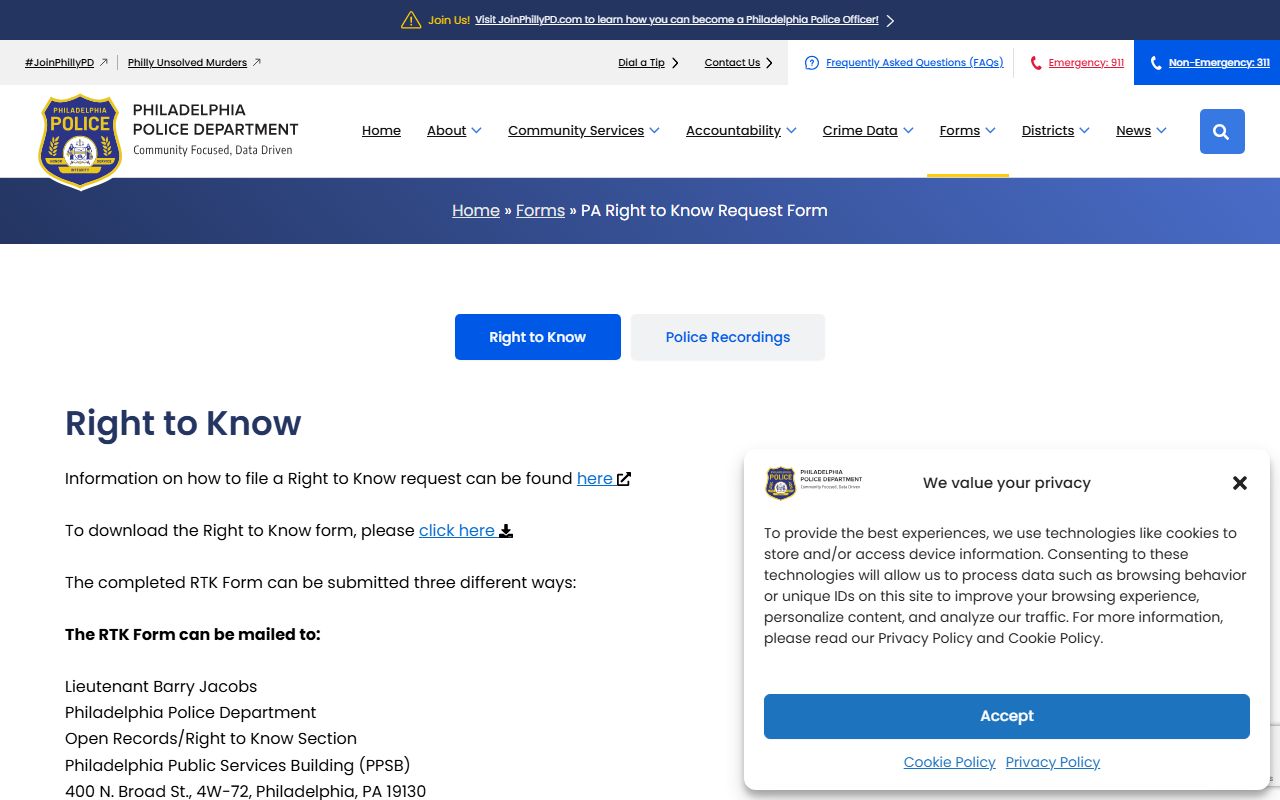
The Right to Know process allows individuals to request specific police incident reports. Requests are subject to review under Pennsylvania's Right-to-Know Law, and some information may be redacted if it involves an ongoing investigation or protected personal data.
Understanding the difference between police records and court records matters when researching Philadelphia felony records. A police report shows what was alleged and who was arrested. The court record shows what charges were formally filed, whether a conviction occurred, and what sentence was imposed. Both have their place depending on what the requester needs. Researchers who want a complete picture typically consult both sources. Police records are useful for verifying incident details, while court records reflect the legal outcome of any prosecution.
Note: Police incident reports may be withheld in part or in full for active investigations, and requesters can expect a response within 30 business days under state law.
Philadelphia Open Records Policy for Felony Information
Philadelphia maintains a dedicated open records policy that governs how city agencies respond to public records requests. This policy applies to municipal departments and city-funded agencies. Criminal court records technically fall under the judiciary rather than city government, but the open records framework still shapes how police, corrections, and administrative records are handled at the city level.
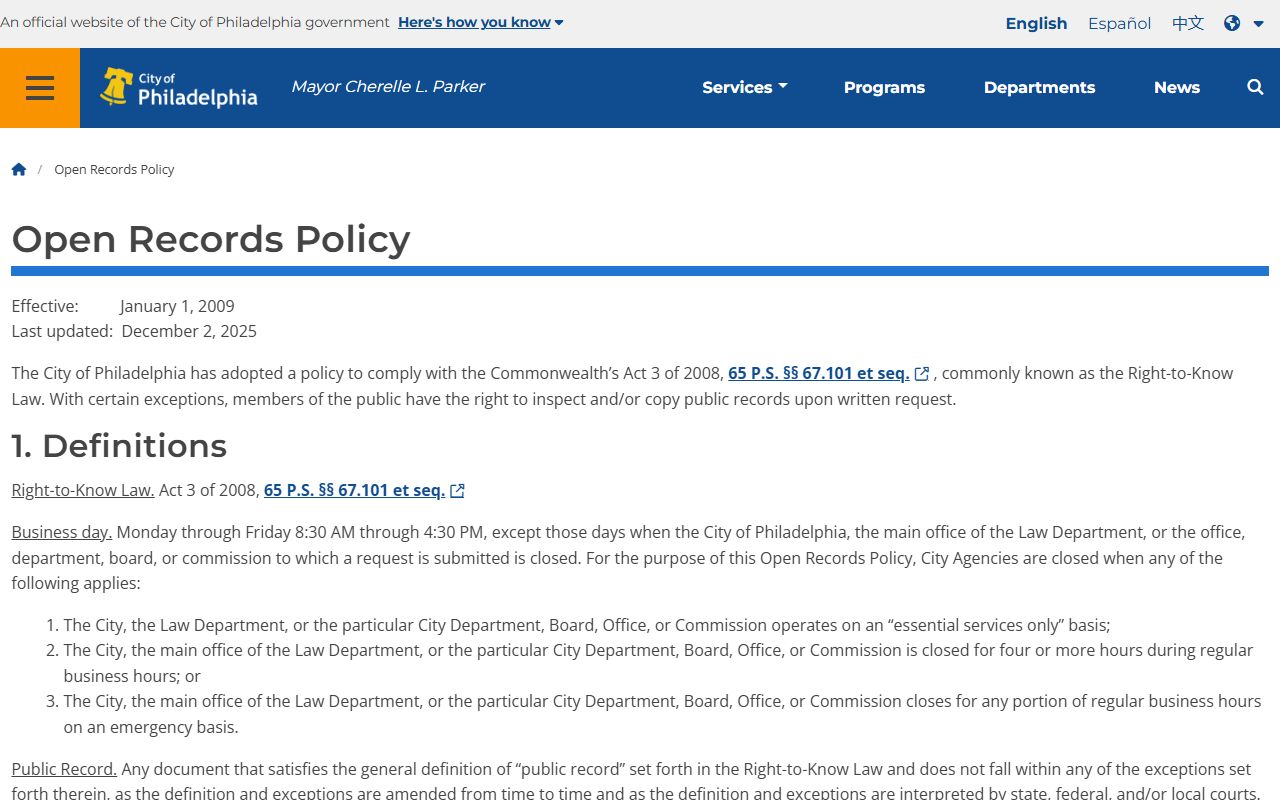
The Philadelphia open records policy is posted by the city's Office of Open Records liaison and outlines how requests are submitted, processed, and appealed. Requests related to felony arrest activity, detention records, or police department operations go through this channel. The policy also describes categories of records that are exempt from disclosure, which is useful to understand before submitting a formal request.
For felony records specifically, most requesters find that the UJS Portal and the Philadelphia Courts website are faster than a formal RTK request. Open records requests are better suited for records that are not available through existing online portals. The two approaches complement each other, and knowing which to use saves time.
Philadelphia Felony Records Through the Courts Website
The Philadelphia Courts website provides direct access to local case information and court calendars. The Criminal Division of the Court of Common Pleas processes felony arraignments, preliminary hearings, trials, sentencing, and post-conviction motions. Case lookup tools on the courts website allow searches by defendant name, docket number, and attorney of record.
Certified copies of Philadelphia felony records can be obtained through the Clerk of Courts office at the Criminal Justice Center, located at 1301 Filbert Street, Philadelphia, PA 19107. Certified copies carry an official seal and are often required for legal proceedings, visa applications, or other formal purposes. Uncertified copies are available for general research. Both types reflect the complete case record as maintained by the court.
Note: The Philadelphia Courts website includes court event calendars that are updated daily and can help researchers confirm scheduled hearings for active felony cases.
Philadelphia Crash Reports and OpenDataPhilly Public Datasets
Philadelphia makes a range of public safety data available through its crash reporting portal and the OpenDataPhilly platform. While these resources are not exclusively about felony records, they connect to the broader landscape of publicly available criminal and incident data in the city. The crash reports portal, for example, documents traffic incidents that sometimes involve criminal charges such as felony DUI or vehicular homicide.
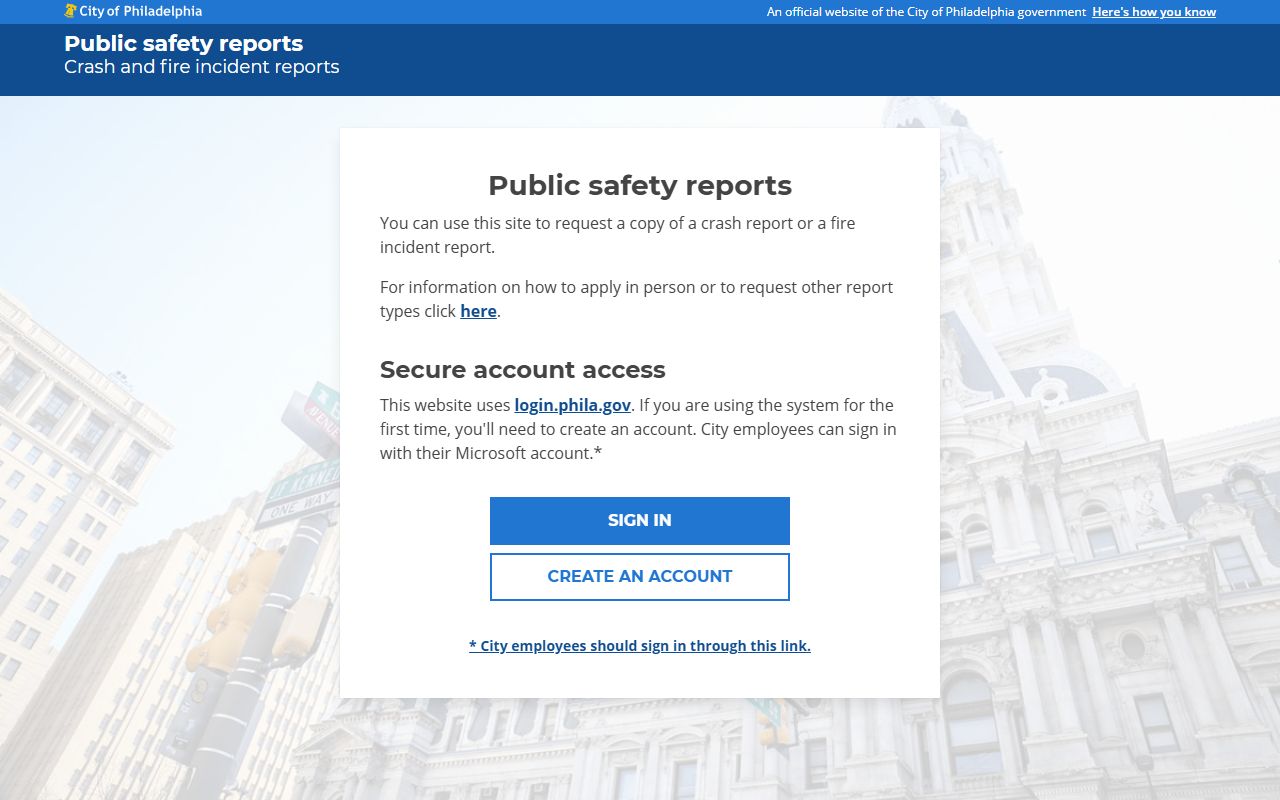
Crash reports in Philadelphia can be requested through the Philadelphia Crash Reports Portal. When a crash leads to a felony prosecution, the court case record will appear in the UJS Portal under the defendant's name. The crash report and the court docket together provide a full picture of the incident and its legal consequences. Researchers studying specific incidents often pull both documents.
OpenDataPhilly is a city-supported data portal that publishes downloadable datasets from city departments. Criminal incident data and arrest statistics are among the available datasets. These are aggregate and statistical in nature rather than individual case records, but they provide useful context for understanding patterns in Philadelphia felony activity over time.
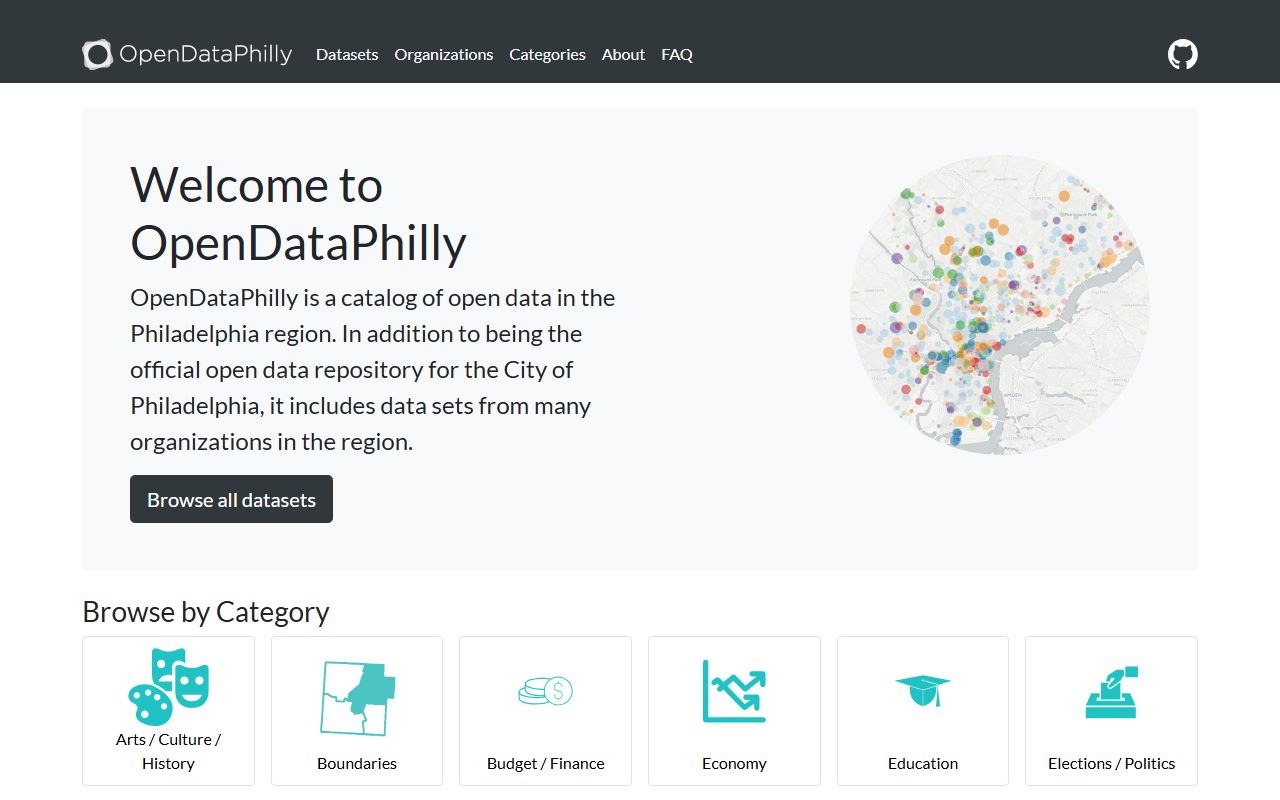
The OpenDataPhilly platform organizes datasets by category, making it possible to locate crime, courts, and public safety data without needing to know specific department names. Datasets are typically updated on a regular schedule and can be downloaded in CSV or other formats for analysis.
Philadelphia Felony Records and the PATCH Background Check System
The Pennsylvania Access to Criminal History system, known as PATCH, is administered by the Pennsylvania State Police. PATCH allows individuals to request a statewide criminal history report that includes felony convictions. For Philadelphia residents or anyone with a Philadelphia case history, PATCH draws from the same records maintained by the state's central repository, which courts report to after each conviction.
PATCH reports reflect convictions statewide. A PATCH search for a Philadelphia subject will include any felony convictions recorded anywhere in Pennsylvania, not only Philadelphia County. Submissions can be made through the PATCH online portal. A PATCH self-check is available for individuals who want to review their own criminal history before sharing it with others. Third-party requests require the subject's consent or a specific legal authorization.
PATCH reports are official state documents and carry significant weight. They list each offense, the court that handled the case, and the date of conviction or disposition. Cases that were dismissed, withdrawn, or resulted in acquittal are generally not included in a PATCH report, though they remain part of the court docket. Understanding this distinction is important when interpreting a PATCH result alongside a UJS Portal search.
Note: PATCH reports reflect information that has been submitted to the state repository; delays in court reporting can occasionally cause a recent conviction to appear later than expected.
Philadelphia Felony Records and Pennsylvania Clean Slate Sealing
Pennsylvania's Clean Slate Act, which took effect in phases and reached automatic sealing eligibility on February 12, 2024, allows certain low-level felony convictions to be sealed from public view after a qualifying waiting period. The standard waiting period for eligible felonies is ten years from the completion of sentence, with no new convictions during that time.
Not all felonies qualify. Violent offenses, sexual offenses, and several other categories are excluded from Clean Slate eligibility regardless of how much time has passed. Philadelphia residents with older nonviolent felony records may find that their records have been automatically sealed under the program. Sealed records are not visible in UJS Portal searches by members of the public, though law enforcement and certain licensing agencies retain access.
Petitioned sealing is also available for offenses that meet the legal criteria but were not automatically processed. A petition is filed in the Court of Common Pleas, and the court reviews the case history before granting or denying the request. Philadelphia's Criminal Justice Center handles these petitions for cases originating in the city. The Pennsylvania Board of Pardons, reachable at (717) 787-2596, handles full pardons, which are different from sealing and expunge more completely from the record.
For individuals seeking to understand their options under Clean Slate or pursuing a pardon, consulting with a Pennsylvania criminal defense attorney is advisable before taking action.
Philadelphia County Felony Records
Philadelphia is a consolidated city-county, meaning the city and county share the same government and court system. Philadelphia County felony records are the same as Philadelphia city felony records. The Philadelphia County Court of Common Pleas serves both the city and county under a single unified structure. For a broader look at criminal records across all Philadelphia County jurisdictions, visit the county records page.
Nearby Pennsylvania Cities
Felony records from cities near Philadelphia are maintained by the courts in their respective counties and are searchable through the same statewide UJS Portal.