
Montgomery County Criminal Records and Felony Case Search
Montgomery County is one of Pennsylvania's most populous counties, located in the southeastern part of the state directly adjacent to Philadelphia. Norristown serves as the county seat and is home to the Court of Common Pleas. Felony records in Montgomery County are accessible through both local and statewide systems, including the county's own case search portal and the UJS Portal. This guide explains how to search criminal dockets, request background checks, and understand the expungement process in Montgomery County.
Montgomery County Quick Facts
Montgomery County Court of Common Pleas
The Montgomery County Court of Common Pleas is based at the county courthouse in Norristown, PA 19404. This court handles all felony prosecutions in the county, along with civil litigation, family court matters, and appeals from lower courts. As one of Pennsylvania's largest counties, Montgomery processes a high volume of criminal cases each year.
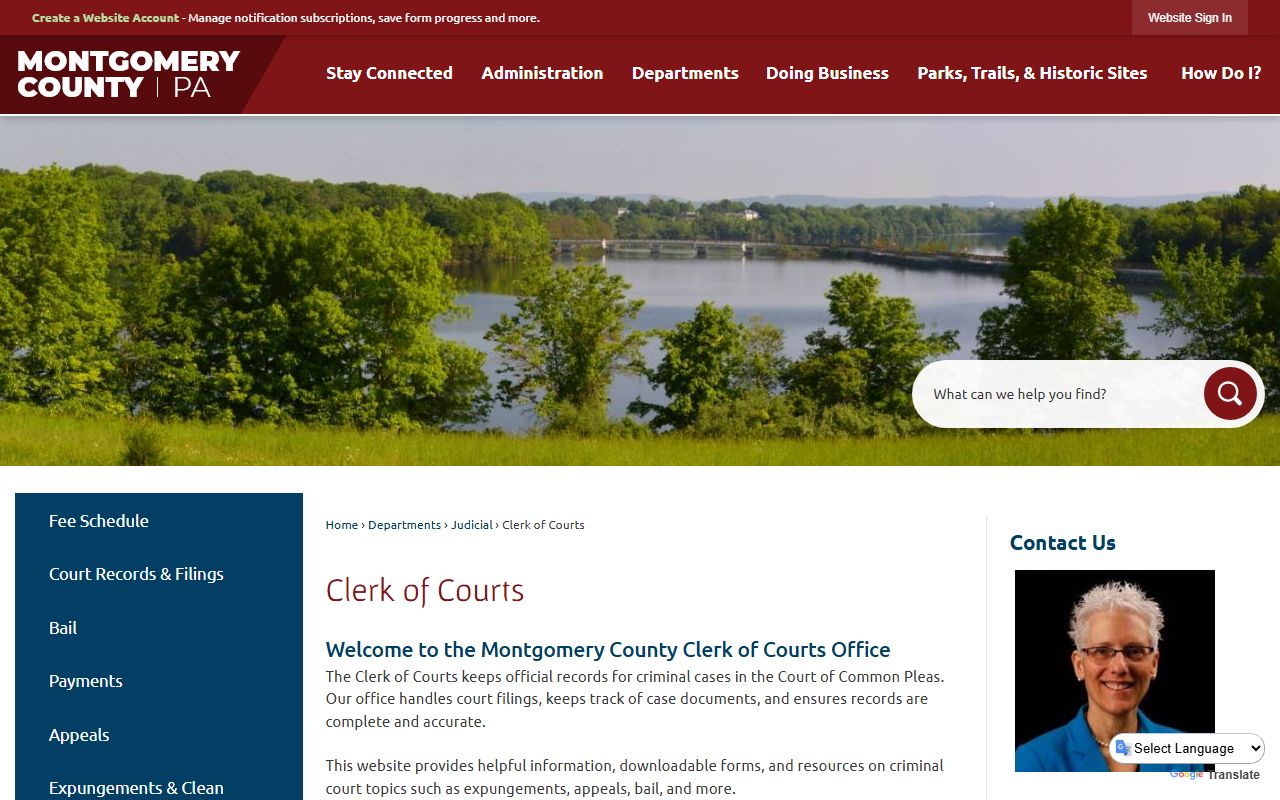
Montgomery County maintains separate offices for the Clerk of Courts and the Prothonotary. The Clerk of Courts handles criminal filings, including felony dockets, sentence records, and post-conviction petitions. The Prothonotary manages civil case filings. This separation of duties is typical in larger Pennsylvania counties, where case volume requires dedicated staff for each function.
The image below is sourced from the Montgomery County Clerk of Courts page and shows the official office responsible for maintaining felony records in the county.
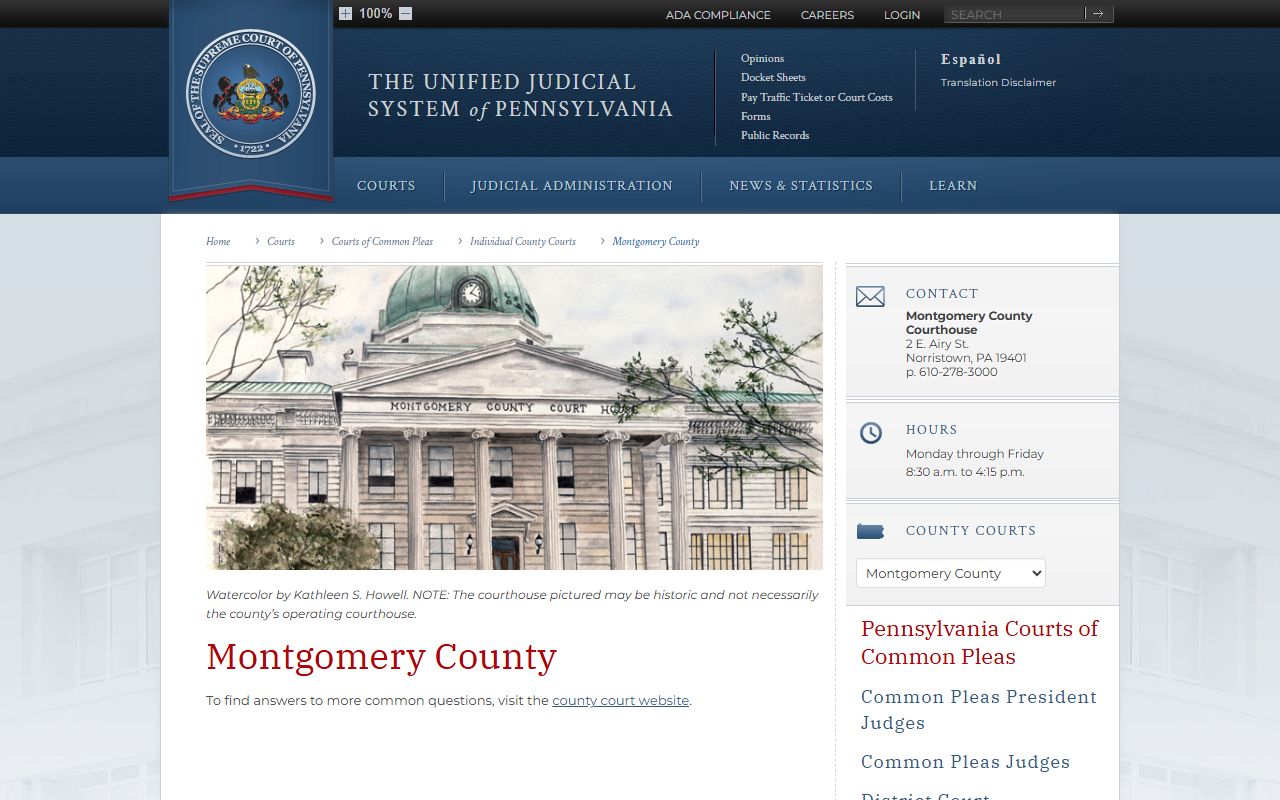
The Pennsylvania Courts page for Montgomery County lists judicial assignments, court divisions, and district contact information. This is a reliable resource for understanding the structure of the local court.
Note: The Clerk of Courts and Prothonotary are separate offices with different jurisdictions; felony records belong to the Clerk of Courts.
Montgomery County Case Search Portal
Montgomery County operates its own online case search system at courtsapp.montcopa.org. This portal is specific to Montgomery County and offers more granular search options than the statewide UJS Portal in some respects. Users can search by name, case number, or date of birth. Results include both criminal and civil cases filed in the Court of Common Pleas.
The image below comes from the Montgomery County case search portal and shows the interface used to locate felony case records online.
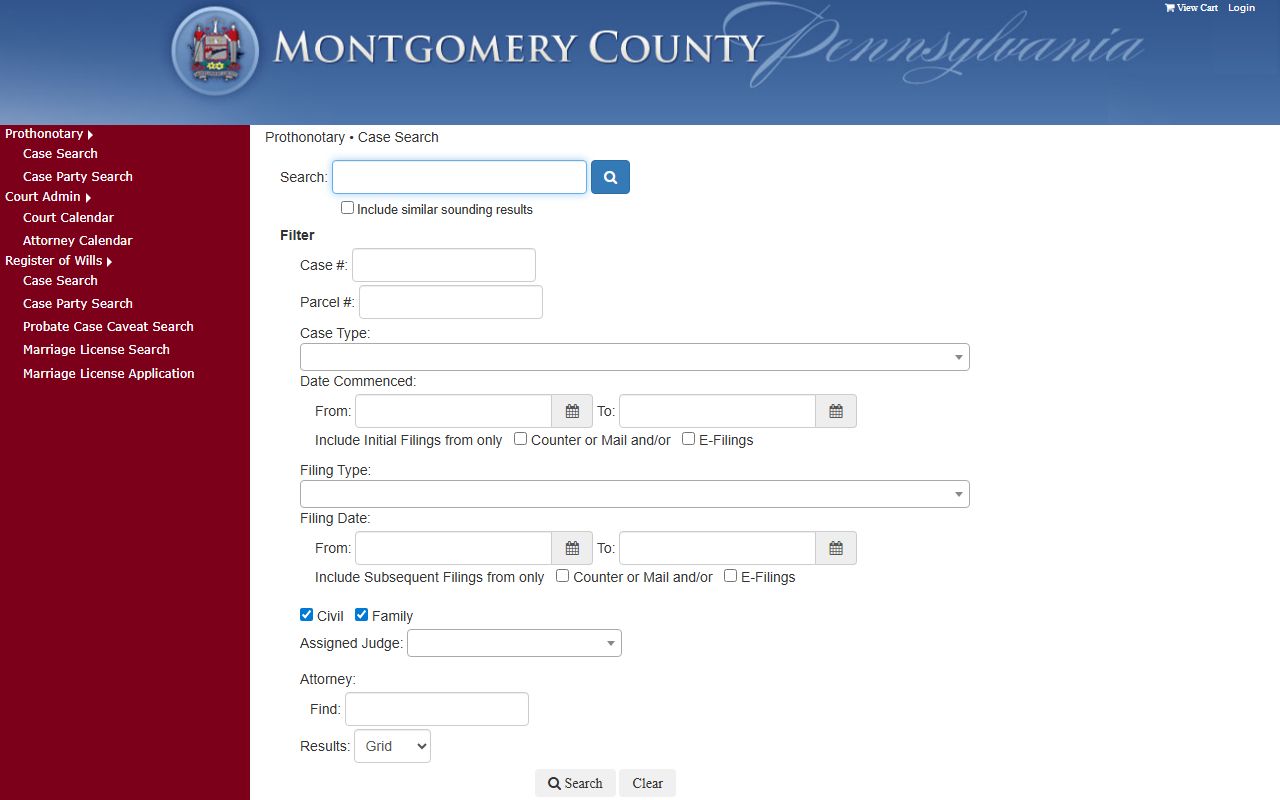
When searching by name, the system returns a list of matching cases. Each result shows the docket number, case caption, filing date, and current status. Clicking into a case displays the full docket sheet, including all charges, court events, and dispositions. The portal is updated regularly and reflects recent filings within a short window after they are processed by the clerk's office.
The county portal is best for users who know the case is from Montgomery County specifically. For searches that may span multiple counties, the statewide UJS Portal covers all 67 Pennsylvania counties from a single search interface. Both tools are free to use and require no account or login.
Searching Montgomery County Felony Records
Montgomery County provides several ways to access felony records. The county case search portal and the UJS Portal are the two primary online options. For users who need certified copies or who cannot find what they need online, in-person and mail requests are also available through the Clerk of Courts in Norristown.
The image below, sourced from the Montgomery County Court Records page, shows how criminal and civil records are organized for public access through the county's official web presence.
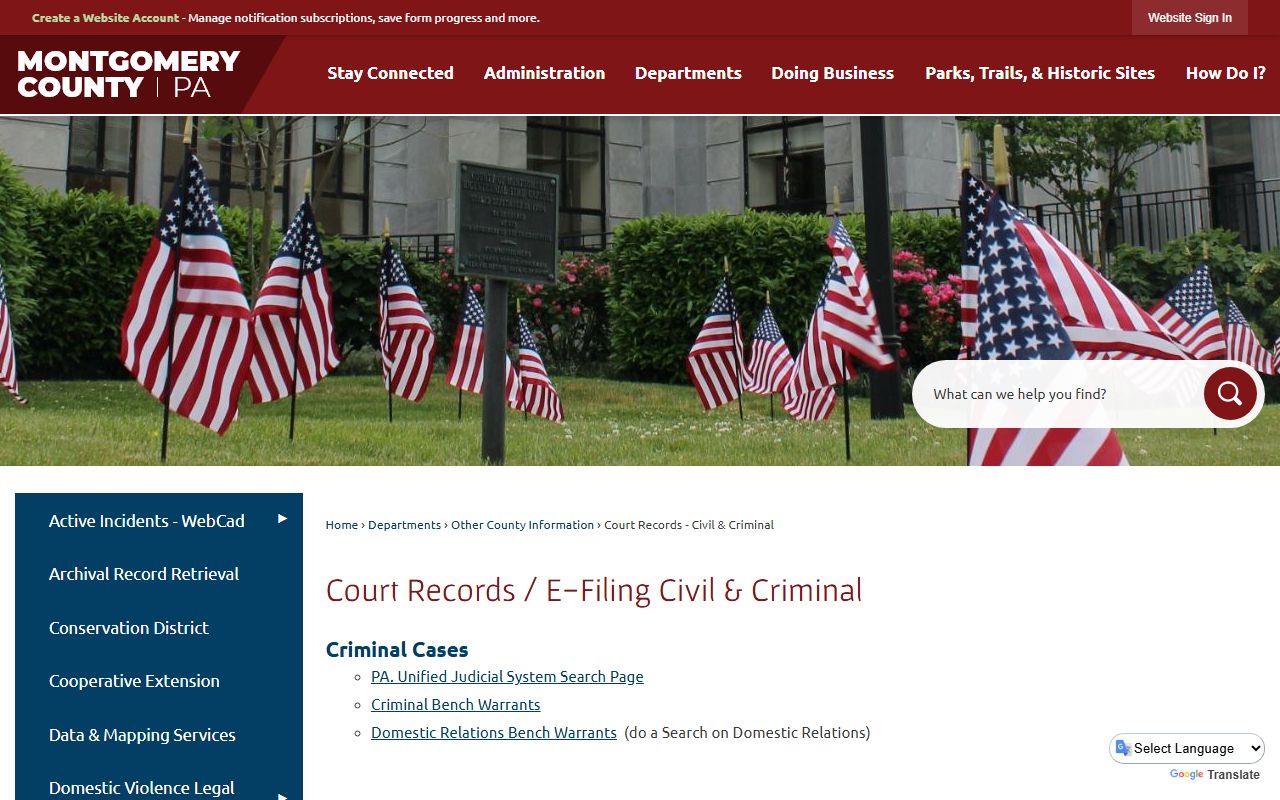
The Montgomery County Court Records page provides direct links and instructions for both civil and criminal record requests. It distinguishes between what can be accessed online and what requires a visit or a written request. Criminal dockets are generally available online. Sealed or expunged records are not returned in public searches.
Mail requests to the Clerk of Courts should include the full name of the individual, a case number if known, and a description of the documents needed. The office may charge a per-page fee for copies. Turnaround times vary based on office workload.
The following record types are accessible through the Montgomery County court system:
- Felony criminal dockets from the Court of Common Pleas
- Case summaries and disposition reports
- Sentencing orders and probation conditions
- Appellate case references and remand orders
- Post-conviction relief petitions and outcomes
Note: Court dockets show charges as filed and outcomes as recorded; they do not include police reports or investigative files, which are held by law enforcement agencies.
What Montgomery County Felony Records Show
A felony docket sheet from Montgomery County contains a structured record of every step in the case. The top of the docket identifies the case by docket number, the name of the defendant, and the assigned judge. Below that, the charges are listed with their statute citations, grading (first-degree felony, second-degree felony, etc.), and the date each charge was filed.
The image below shows the Pennsylvania Courts listing for Montgomery County, which provides background on how the court is structured and how records are organized at the state level.
Each court event appears in the docket in chronological order. A preliminary hearing entry shows whether charges were held over for trial or dismissed. A trial entry shows the outcome, whether that was a verdict after jury trial, a bench trial decision, or a guilty plea. Sentencing entries record the sentence imposed, including any prison term, probation length, fines, and restitution orders.
Case status fields tell you whether a case is open or closed. An open case may have future court dates listed. A closed case shows a final disposition. If the case was appealed, the docket notes the Superior Court docket number for the appeal. Revocation of probation and violation hearings also appear on the original docket rather than as a new case.
Criminal history information drawn from dockets reflects court outcomes only. Arrests that did not result in charges, or charges that were dismissed, appear on the docket but are not convictions. This distinction matters when interpreting what a docket sheet shows about a person's record.
Criminal Background Checks in Montgomery County
Pennsylvania provides two primary systems for criminal background checks: the PATCH system run by the Pennsylvania State Police, and the court docket system accessible through county clerks and the UJS Portal. Each serves a distinct purpose and returns different data.
PATCH, available at epatch.state.pa.us, provides a certified criminal history record. This record reflects convictions and arrests reported by law enforcement agencies across the state. Pennsylvania's Criminal History Record Information Act, codified at 18 Pa.C.S. § 9121, governs who may access CHRIA records and for what purposes. Under 18 Pa.C.S. § 9101, the statute defines what constitutes criminal history record information and how it must be handled.
Court docket searches through the Montgomery County portal or UJS show the full case record, including non-convictions. This can be useful for researchers, attorneys, or individuals reviewing their own history before filing for expungement. The Pennsylvania State Police website provides instructions for submitting PATCH requests, disputing inaccurate entries, and understanding what a result means.
Montgomery County residents who need background checks for official purposes should use PATCH for certified results. Court docket searches are more appropriate when the goal is reviewing the full record of a specific case, or when PATCH results need to be cross-checked against original court documents.
Record Sealing and Expungement in Montgomery County
Pennsylvania's Clean Slate 3.0, which took effect February 12, 2024, expanded automatic sealing to cover more offense types. Under this law, eligible convictions are sealed automatically by the court after a set waiting period without any action required from the individual. The process is handled by the Administrative Office of Pennsylvania Courts and applies statewide, including Montgomery County cases.
For records that do not qualify for automatic sealing, a petition for expungement or limited access must be filed with the Clerk of Courts in Norristown. The petition must identify the case, state the legal grounds for relief, and include any required documentation. The Commonwealth is notified and may respond. A judge reviews the petition and may hold a hearing before ruling.
Under 18 Pa.C.S. § 9122, expungement is available in specific situations, including arrests that did not result in conviction, cases where charges were nolle prossed, and summary conviction records after a waiting period. Most felony convictions are not eligible for expungement through the standard petition process.
For felony convictions that do not qualify for sealing or expungement, a pardon is the only available remedy. The Pennsylvania Board of Pardons accepts applications, holds hearings, and makes recommendations to the Governor. A pardon does not erase the conviction but restores civil rights and can clear the record for certain purposes. Montgomery County residents should consult with an attorney before beginning either the expungement or pardon process.
Note: Sealing a record under Clean Slate removes it from public court searches, but the record remains accessible to law enforcement and criminal justice agencies.
Right to Know Law in Montgomery County
Pennsylvania's Right to Know Law at 65 P.S. § 67.101 gives residents the right to request records held by public agencies, including Montgomery County government offices. This law covers most county agency records but does not override the separate rules that govern court records. Court records in Pennsylvania follow court access rules established by the Supreme Court, which run parallel to the RTKL.
Criminal court records are presumptively public in Pennsylvania. This means that docket sheets, orders, and case filings are available to the public unless a specific exception applies. Juvenile records are sealed. Records that have been expunged or limited in access under Clean Slate are no longer returned in public searches. Certain ongoing investigation records may also be withheld.
Formal Right to Know requests in Montgomery County are submitted to the county's open records officer. The Pennsylvania Office of Open Records provides guidance, model request forms, and a process for appealing denials. Montgomery County must respond within five business days, though extensions are permitted in complex cases.
For court records specifically, a direct request to the Clerk of Courts is faster and more direct than a formal RTKL submission. The clerk can provide certified copies of dockets and orders, which carry an official seal and are suitable for use in legal proceedings or other formal contexts. Fees for certified copies vary by the number of pages and the type of document requested.
Cities in Montgomery County
Montgomery County includes several cities and townships with their own local records and law enforcement presence.
Nearby Counties
Montgomery County shares borders with several counties in southeastern Pennsylvania, each with its own court system and records access process.